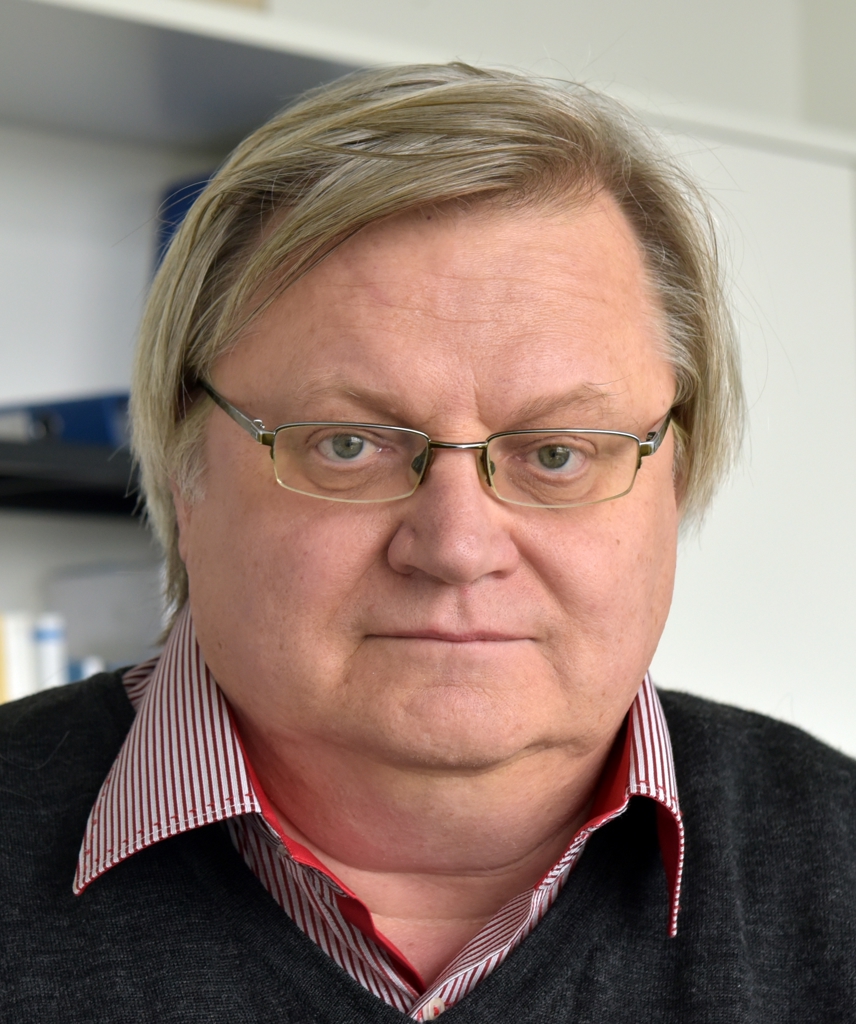
Prof. Yuri Kivshar, Research School of Physics, Australian National University,Australia(FAA, FAIP, FSPIE, FOSA, FAPS, FInstP)
Short Biography: Kivshar's research publications have accumulated 129782 citations including 58622 citations for last 5 years (Google Scholar, 5 January 2025), and this number is growing with more than 240 new citations per week. Kivshar's Hirsch index h, defined as the number of papers which have attracted at least h citations each (J.E. Hirsch, 2005) is one of the highest in Australia and the world: Google Scholar: h=169 and ISI World of Science: h=136. His key contributions to nonlinear physics and photonics include pioneering work on nonlinear localized modes in optical systems, optical solitons and vortices, localization in discrete systems, as well as nonlinear effects in plasmonics and metamaterials. His results are summarized in five books and highlighted in an invited article in Physics Today (2004) and three review papers in Reviews of Modern Physics (impact factor 44.982).Kivshar received his MSc (1981) and PhD (1984) in physics from Kharkov National University and the Institute for Low Temperature Physics and Engineering (Ukraine), respectively, and a DSc in Photonics (2020) in St. Petersburg, Russia. His career includes research positions in Ukraine, Spain, and Germany before joining ANU in 1993. He became a Distinguished Professor in 2015 and served as Founder and Head of ANU’s Nonlinear Physics Centre (2002–2020).
Kivshar has been awarded two consecutive Australian Research Council (ARC) Federation Fellowships, which enabled full-time research and strongly boosted his research impact. The first fellowship supported the establishment of the Nonlinear Physics Centre (NLPC) and close collaboration with the ARC Centre of Excellence CUDOS; the second facilitated the development of world-class experimental programs in metaphotonics and nanophotonics.With exceptional academic influence, his work has accumulated 129,782 citations (Google Scholar, h-index = 169), including 43 papers in Nature and Nature family journals, 16 in Science and Science Advances, 99 in Physical Review Letters, and 47 in Nano Letters and ACS Nano. He has been a Clarivate Highly Cited Researcher (2016–2023) and has delivered more than 140 plenary, keynote, and invited talks at major international conferences.
Prof. Yanhua Luo, Shanghai University , China(IEEE / Optica / SPIE / CSOE Senior Member)
Short Biography: Prof. Yanhua Luo received his B.E and PhD degrees from University of Science and Technology of China (UTSC) in 2004 and 2009, respectively. He used to work at the Photonics and Optical Communications at University of New South Wales (UNSW) after his postdoctoral work at USTC. In 2022, he relocated from UNSW to Shanghai University (SHU). Currently, he works as a professor of SCIE at SHU to develop the next generation functional specialty optical fibers and their devices. He has presided over and participated in >20 important scientific research projects funded by NSFC, ARC, etc. So far, he has published over 170 SCI papers in high-level academic journals, e.g., Appl. Phys. Rev., Lab Chip, etc. He has also authored or co-authored 11 chapters for English monographs. He was invited to write 5 review papers, give 10 invited talks and serve as a member of the editorial board of Biosensors. His publications have been cited >4800 times by Google Scholar, with an H-index 37. In 2019, Technology Magazine remarked 3D printed silica optical fiber (SOF) as ‘The top three 3D printing breakthroughs of 2019’.
Speech Title: Specialty Optical Fibers: The 'All-Purpose' Devices of the Information Society
Prof.Paulo César DE MORAIS, Catholic University of Brasilia, Brazil
Short Biography: Paulo C. DE MORAIS (H-63), PhD, was full Professor of Physics at the University of Brasilia (UnB) – Brazil up to 2013, Appointed as UnB’s Emeritus Professor (2014), Appointed as Guest Professor of Huazhong University of Science and Technology – China (2011), Visiting Professor at Huazhong University of Science and Technology (HUST) – China (2012-2015), Appointed as Distinguished Professor at Anhui University (AHU) – China (2016-2019), Appointed as Full Professor at Catholic University of Brasília (UCB) – Brazil (2018), Appointed as CNPq-1A Research Fellowship since 2010. 2007 Master Research Prize from UnB, 2008-member of the European ERA NET Nanoscience Committee, Member of the IEEE-Magnetic Society Technical Committee, Senior Member of the IEEE Society, 2012 China’s 1000 Foreign Expert Recipient, and 2012 Academic Excellence Award from Brazilian Professor’s Union. He held two-years (1987-1988) post-doc position with Bell Communications Research – New Jersey, USA and received his Doctoral degree in Solid State Physics (1986) from the Federal University of Minas Gerais – Brazil. He graduated in both Chemistry (1976) and Physics (1977) at UnB. Professor Morais is member of the Brazilian Physical Society and the Institute of Electrical and Electronics Engineers – IEEE. He has served as referee for more than 50 technical journals, takes part of the Editorial Board of more than 15 technical journals and has conducted research on nanomaterials for over 40 years. He is known for his research in preparation, characterization and applications of nanosized materials (magnetic fluid, magnetoliposome, magnetic nanoemulsion, magnetic nanocapsule, magnetic nanofilm, magnetic nanocomposite, nanosized semiconductors, polymeric dots, carbon dots, and graphene quantum dots). With more than 500 published papers in peer reviewed journals, more than 14,500 citations, about 300 international invited talks (35 countries), and 16 filed patents. He has appeared in recent World ranking of top scientists, such as 2020-Stanford, 2022-Research.com, 2023-AD Scientific Index, 2023-Research.com, 2024-Elsevier, ONE Research Community, 2025-AD Scientific Index, 2025-Research.com, 2025-Stanford-Elsevier, and 2026-Research.com.
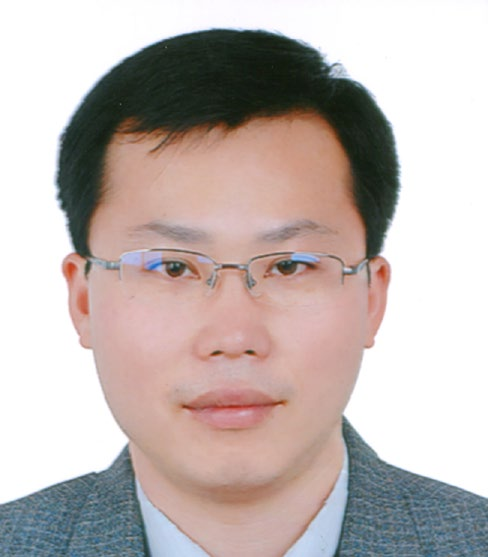
Prof.Chen Peng, School of Electronics Science and Engineering Key Laboratory of Advanced Photonic and Electronic Materials Nanjing University, China
Short Biography: Prof.Chen Peng has been engaged in research on Group-III nitride semiconductors and devices since 1995, and received his Ph.D. in Physics Department of Nanjing University in 2000. He has been the Principal Investigator (PI) at the Institute of Materials Research (IMRE), Singapore Agency for Science Technology and Research (A-Star). He has led three and participated in five international collaboration projects in Singapore. In 2011, he won the “Outstanding Contribution Award of 333 Talents Project”, and the “Innovation Individual Award of China Industry-University Collaboration Research”. In 2015, he served as the PI for the National Hi-tech Research Project in China titled “Third Generation Semiconductor Devices and Evaluation Technology”. In 2024, he again took on the role of PI for the National Key Research and Development Program in China, focused on “Collaborative Research on Micro-LED Material Growth and Chip Fabrication based on Gallium Nitride Single Crystal Substrates”. He has applied for 7 international patents, 6 of which have been granted, and applied for more than 100 national patents. A total of more than 210 research papers have been published, of which more than 190 are cited in SCI, including in Advanced Materials, Advanced Optical Materials, Small, IEEE Electron Device Letters, Applied Physics Letters, Nanomaterials et.al.. He also participated in the compilation of five academic books. He was also a member of the Editorial Board or a guest editor for several domestic and international academic journals.
Speech Title: Microcavity Effects and Spontaneous Emission Modulation in Micro-LEDs
Prof. Koichi Shimizu, School of Optoelectronic Engineering, Xidian University, China.
Short Biography: Prof. Koichi Shimizu received M.S. (1976) and Ph.D. (1979) degrees, from University of Washington, Seattle, USA. He was Research Associate in University of Washington 1974-79. He was an Assistant-, an Associate- Professors, and a Professor in Hokkaido University, Sapporo, Japan in 1979-2016. He is currently a Professor Emeritus of Hokkaido University, Japan, an Invited Research Professor of Waseda University, Japan and a Professor of Xidian University, Xi’an, China. He has been engaged in the studies of biomedical engineering including those of wave propagation in biological media, optical measurement, biotelemetry and biological effects of electromagnetic field. He served as an associate editor of IEEE Trans. ITB in 1999–2007. He has been a Fellow of the Electromagnetics Academy, and an editorial board member of Scientific Reports, Nature. He is a member of IEEE, OSA, ISOB, IEEJ, IEICE and JSMBE. He received Research Promotion Award (1981), Best Paper Award (1995) and New Technology Development Award (2020) from Japan Society for Medical and Biological Engineering.
Speech Title: Physics-Guided Deep Learning for Joint Deblurring and 3D Reconstruction in NIR Animal Transillumination Imaging